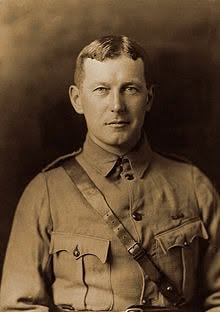
John McCrae Obituary, Death – Remembering the Canadian Physician, Soldier and Poet Behind “In Flanders Fields”
\John McCrae remains one of Canada’s most enduring historical figures, remembered for his contributions as a physician and military officer and, above all, for writing the celebrated First World War poem “In Flanders Fields.”
Born in Guelph, Ontario, on November 30, 1872, McCrae developed an interest in both medicine and military service from an early age. His professional life brought together these two commitments, as he worked to care for others while serving in the Canadian military.
He studied medicine at the University of Toronto, graduating in 1898 with a medical degree and the institution’s gold medal. He subsequently worked at several hospitals and medical institutions, including Toronto General Hospital, Johns Hopkins Hospital and Montreal General Hospital. He also became a respected medical teacher and researcher.
Military Service and the First World War
McCrae served in the South African War before returning to his medical career in Canada. When the First World War began in 1914, he joined the Canadian Expeditionary Force and served as a medical officer with the Canadian Field Artillery.
His experiences during the fighting in Belgium profoundly affected him. In April and May 1915, he was stationed near Ypres, where Canadian forces experienced devastating losses.
The death of his friend, Lieutenant Alexis Helmer, on May 2, 1915, became an important influence on McCrae’s best-known literary work.
The Story Behind “In Flanders Fields”
McCrae wrote “In Flanders Fields” in May 1915, inspired by the battlefield graves and the wild poppies growing among them following the fighting near Ypres.
The poem was first published in Britain’s Punch magazine in December 1915. Its powerful reflections on sacrifice, loss and remembrance resonated with readers and helped establish the red poppy as an enduring symbol of remembrance for those who died in war.
The poem continues to be recited during Remembrance Day ceremonies in Canada and other countries, preserving McCrae’s words for generations who did not experience the First World War.
His Final Years and Death
McCrae continued serving during the war, eventually taking responsibility for medical work at No. 3 Canadian General Hospital in France.
His health deteriorated during the final years of the conflict. He suffered from respiratory problems and became seriously ill in January 1918.
John McCrae died on January 28, 1918, in Boulogne, France, from pneumonia and meningitis. He was 45 years old. He was buried with full military honours at Wimereux Cemetery.
A Legacy Remembered
More than a century after his death, John McCrae’s contribution to Canadian history remains closely associated with the meaning of Remembrance Day.
His work as a physician reflected a commitment to caring for the sick and wounded, while his military service placed him directly within the conflict that inspired his most famous poem.
Today, his birthplace in Guelph is preserved as McCrae House, a museum dedicated to his life and legacy.
As Canadians pause each November 11 to honour those who served and died in military conflicts, McCrae’s words continue to provide a lasting expression of remembrance, sacrifice and the human cost of war.